


Key Points for Converting PVC Formulations from Lead Stabilizers to Calcium-Zinc Stabilizers
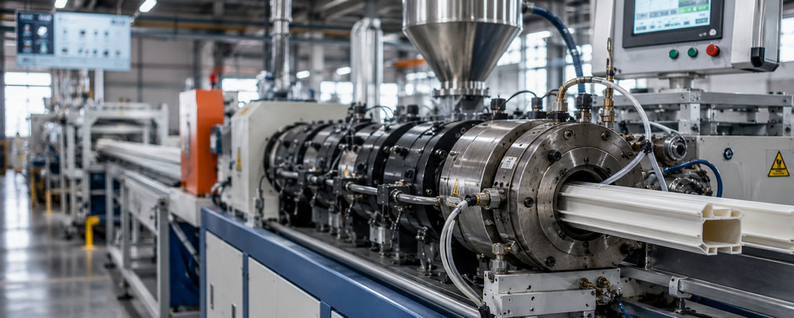
As environmental regulations become stricter, more PVC manufacturers are replacing traditional lead stabilizers with calcium-zinc (Ca/Zn) stabilizers. However, many conversion projects fail during production trials.
In most cases, the problem is not the quality of the Ca/Zn stabilizer. The real reason is that the original lead-based formulation is used without making the necessary adjustments. Simply replacing the stabilizer at a 1:1 dosage while keeping the same lubricant system, additives, and processing conditions often leads to various product defects.
1. Three Common Problems When Switching from Lead Stabilizers to Ca/Zn Stabilizers
1.1 Lubrication Imbalance (The Most Common Problem)
Lead stabilizer packages usually contain a balanced combination of internal and external lubricants, making them highly compatible with traditional PVC lubricant systems based on PE wax, paraffin wax, and stearic acid.
Ca/Zn stabilizers also contain lubricating components, but their lubrication balance is different from that of lead stabilizers. If the original lubricant package is kept unchanged after the conversion, the total lubrication level may become too high.
Typical problems include:
* Oily surface
* Plate-out and mold deposits
* Greasy surface feel
* Carbon build-up on the die
* Dirty calibration molds
* White deposits after storage
* Poor appearance and reduced printing or laminating performance
1.2 Poor Fusion and Reduced Mechanical Properties
Some Ca/Zn stabilizer systems behave differently from traditional lead stabilizers during PVC fusion. If the original formulation is used without adjustment, PVC may not fuse completely. Because the fusion mechanism of Ca/Zn systems is different, the processing aid package often needs to be optimized.
This problem becomes more obvious in formulations with high calcium carbonate loading.
Typical problems include:
* Poor melt flow
* Rough and dull surface
* Uneven texture
* Low toughness
* Brittle products
* Cracking
* Reduced tensile strength and elongation
* Higher rejection rate during production
1.3 Insufficient Heat Stability
Lead stabilizers provide excellent long-term heat stability and processing stability.
If the Ca/Zn stabilizer system does not contain enough co-stabilizers, such as β-diketone co-stabilizers, phosphite stabilizers, and antioxidants, heat stability may not be sufficient.
Typical problems include:
* Zinc burning during high-temperature extrusion
* Yellowing after extrusion
* Continuous discoloration during storage
* Poor weather resistance
* Faster aging and fading in outdoor applications
2. Recommended Solutions
Replacing a lead stabilizer with a Ca/Zn stabilizer is not simply changing one additive. The entire formulation and processing conditions should be optimized together.
2.1 Optimize the Lubrication System
Reduce the dosage of PE wax, paraffin wax, stearic acid, and other lubricants according to the product type, such as pipes, profiles, sheets, compounds, or flexible PVC.
A proper balance between internal and external lubrication helps eliminate:
* Plate-out
* Oil bleeding
* Mold fouling
* Carbon build-up
* Surface defects
2.2 Improve the Fusion System
Add suitable PVC processing aids to improve fusion speed, melt uniformity, and melt strength.
This helps achieve:
* Better surface gloss
* Smoother melt flow
* Higher toughness
* Better impact strength
* Reduced brittleness and cracking
3. Build a Complete Heat Stabilization System
Besides the main Ca/Zn stabilizer, a well-designed formulation should also include suitable β-diketone co-stabilizers, phosphite stabilizers, and antioxidants to improve overall heat stability.
A complete stabilization system can effectively reduce:
* Zinc burning
* Yellowing
* Long-term discoloration
* Thermal degradation
It also improves whiteness, weather resistance, and long-term product quality.
When selecting a Ca/Zn stabilizer, manufacturers should also confirm whether the supplier has specifically optimized the stabilizer for replacing lead stabilizers.
4. Fine-Tune the Processing Conditions
After changing the formulation, processing parameters should also be adjusted.
Depending on the new formulation, it may be necessary to optimize:
* Barrel temperature
* Screw speed
* Haul-off speed
Proper process adjustment helps maintain stable production and consistent product quality
Conclusion
If you are converting a PVC formulation from lead stabilizers to calcium-zinc stabilizers, do not simply replace the stabilizer and keep everything else unchanged.
A successful conversion requires the optimization of:
* The stabilization system
* The lubrication system
* Processing aids
* Processing conditions
Only by optimizing both the formulation and the production process can manufacturers achieve a successful lead-free upgrade while maintaining processing stability, product quality, and production efficiency.
At NOVISTA, we provide customized formulation optimization and on-site technical support for various PVC applications, including pipes, profiles, sheets, cable compounds, and injection molding products. Our goal is to help customers shorten trial time, reduce production risks, and improve the success rate of lead-to-Ca/Zn conversion.