


Extruder Size Matters: Why a 35mm, 65mm, and 95mm Extruder Are More Than Just Different Diameters
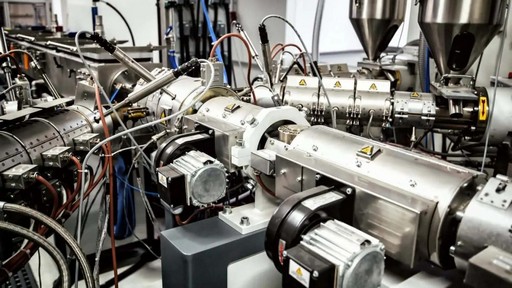
In the plastics industry, we often hear people say:
"We tested it on a 35mm extruder."
"Our production line is a 65mm machine."
"This product needs a 95mm extruder."
For newcomers, these numbers may sound like simple machine specifications. In reality, they represent completely different production philosophies.
What do these numbers mean?
The numbers refer to the screw diameter of the extruder:
-35mm Extruder – Laboratory and sampling machine
-65mm Extruder – Mainstream production machine
-95mm Extruder – Large-scale industrial production line
The difference is not just a few millimeters. As the screw diameter increases, the machine volume and output increase dramatically, changing the processing behavior, heat generation, and production economics.
35mm Extruder – R&D and Product Development
Typical output: 20–80 kg/hour
Perfect for:
-Formula development
-Small-batch trials
-Customer samples
-Customized products
However, many people overlook one fact:
A formulation that performs perfectly on a 35mm machine may not work the same way on a larger production line.
65mm Extruder – The Industry Workhorse
Typical output: 300–500 kg/hour
This is the most common machine size for:
-PVC compounds
-Masterbatches
-Filled compounds
-Flame-retardant formulations
It offers the best balance between flexibility and productivity, which is why many compounders consider it their core production equipment.
95mm Extruder – Scale and Efficiency
Typical output: 1.3–2.5 tons/hour or even higher
Designed for:
-Large-volume production
-Mature formulations
-Cost optimization
The processing cost per ton can be significantly lower, but changing colors or formulations becomes expensive because cleaning and downtime can generate hundreds of kilograms of waste.
The Biggest Mistake: Assuming Scale-Up Is Easy
One of the most common misconceptions in plastics processing is:
"If it works on a 35mm machine, it will work on a 65mm or 95mm machine."
Unfortunately, scale-up is rarely that simple.
When moving from a small extruder to a larger one, many factors change:
-Shear rate
-Heat accumulation
-Residence time
-Feeding behavior
-Venting efficiency
-Dispersion performance
This is why successful laboratory formulations sometimes fail during industrial production.
For PVC Additive Suppliers and Compounders
When customers report processing problems, the first question should not always be:
"Which stabilizer are you using?"
Instead, ask:
-What size extruder are you running?
-Is this a lab trial or commercial production?
-Did the issue appear after scaling up?
In many cases, the problem is not the formulation itself—it is the change in processing conditions during scale-up.
A successful lab formulation does not automatically guarantee successful industrial production. Understanding the relationship between extruder size and processing behavior is essential for every PVC and plastics professional.
At NOVISTA, we don't just supply PVC stabilizers and other PVC additives—we help customers optimize formulations, solve scale-up challenges, and achieve stable production.
Feel free to contact us!