


CPVC Manufacturing Lessons: Large-Diameter Pipes, Sheets, and Roof Tiles
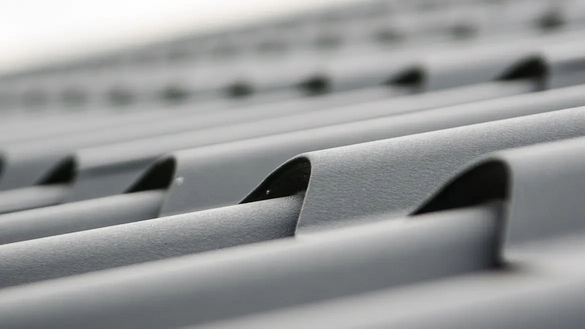
CPVC (Chlorinated PVC) is known for being tough, heat-resistant, and chemical-resistant — which is exactly why it's used for pipes, sheets, and roof tiles in demanding environments like chemical plants and electroplating workshops.
But here's the catch: making large-diameter CPVC products is much harder than making standard PVC ones. The material is trickier to melt, more sensitive to heat, and less "forgiving" on the production line.
After years of hands-on production experience, here are the practical lessons worth sharing — in plain language, no jargon overload.
Start With the Right Equipment
If budget allows, premium extruders (like Krauss Maffei or Battenfeld) are still the top choice. But the good news is that domestic equipment has caught up a lot. As long as you control the plasticizing ratio properly, improve the machining precision of the screw and barrel, and keep temperature control accurate, there's really no major technical barrier left to producing large-diameter parts with local machines.
Rethink the Mold
A common mistake is reusing a standard PVC pipe mold for CPVC. It usually doesn't work well, because the mold cavity holds too much material relative to what CPVC needs.
The fix: shrink the mold's internal space — cutting the internal volume by roughly a quarter is a good starting point. Slightly lengthen the die and mandrel, and increase the compression ratio a bit. This helps the inner and outer walls of the pipe come out smoother and more even.
For injection molding, remember: CPVC needs higher working pressure than a standard machine typically provides, and the gate, runner, and cold slug well all need to be bigger to let the thick melt flow properly.
Formula Optimization: More Isn't Always Better
This is probably the most counter-intuitive lesson. Many manufacturers try to slow down plasticization and improve heat resistance by adding a lot of high-melting-point external lubricant.
It backfires. Yes, the material becomes harder to plasticize — but at the cost of flowability and physical properties. Worse, during production you'll see excessive white residue (bloom) on the surface, and finished products can become so brittle they crack when tapped.
The real goal isn't just "delay plasticization" — it's finding the balance between delayed plasticization and good overall flow, without sacrificing the resin's molecular structure.
Processing Tips That Actually Matter
Large parts sit in the machine and mold much longer than small ones, so a few extra precautions go a long way:
Before startup: Fill the mold with purge compound first and let it preheat — this evens out the mold temperature before real production begins.
Startup sequence: Run the line with regular PVC first, then switch over to CPVC. Set the temperature a bit lower at startup — CPVC's temperature naturally climbs as shearing continues, so starting low avoids overheating later.
Mandrel heating: Once the pipe is running smoothly, you can turn the mandrel heater off, or keep it on a low-power setting just for temperature maintenance.
For CPVC fittings (injection molded), a few extra rules apply compared to PVC-U fittings:
- Barrel temperature should be set slightly higher than for PVC-U.
- Mold temperature: around 40°C.
- Because CPVC melt is highly viscous, screw rotation generates more shear heat — so keep screw speed slower.
- Back pressure during plasticizing should stay low, roughly 3–10 MPa.
- Don't inject too fast — high injection speed causes friction at the gate, leading to burn marks and surface streaks near the gate.
- Because the melt doesn't flow easily, injection pressure needs to be higher, and the gate should be larger.
- Good pelletizing quality matters — the raw pellets themselves need to be well-plasticized before they even reach the mold.
Sheets and Roof Tiles: A Different Challenge
CPVC sheets and roof tiles bring their own headache: very poor heat stability, with a strong tendency to release HCl gas at high temperature.
The processing philosophy here is: low-temperature, low-shear processing throughout; precise temperature control at every stage; a stronger stabilizer and lubricant system; a longer flat land at the die lip to compensate for die swell after the melt leaves the mold; and flow-restrictor bars at both ends of the die head to fix the classic problem of "thick edges, thin middle."
CPVC roof tiles, compared to regular PVC tiles, offer better heat resistance, flame retardance, and acid/alkali resistance — which is why they're popular in chemical plants, smelters, and electroplating facilities. But they share the same processing challenges as CPVC sheets: poor thermal stability, a narrow processing window, and high melt viscosity, all of which call for carefully tuned lubricants and stabilizers.
The Bottom Line
Whether it's large-diameter pipes and fittings, sheets, or roof tiles, CPVC processing keeps coming back to the same core tension: the material's poor heat stability and narrow processing window versus the need for good flow and strong physical properties.
Pipes and fittings live or die by equipment setup, mold design, and formula balance. Sheets and roof tiles add another layer — low-temperature, low-shear processing and a much tighter thermal control window, since CPVC releases HCl easily at high temperature.
Across all three product types, there's no single silver-bullet trick. It's about getting equipment, mold design, formula, and process working together — and resisting the temptation to over-correct one variable (like piling on lubricant to "fix" plasticization) at the expense of everything else.
Get that balance right for each product type, and there's no real technical barrier left standing.
What's been your experience with large-diameter CPVC production? Would love to hear other perspectives from people working with this material.