


Yellowing of PVC in Construction Applications: Causes and Mechanisms
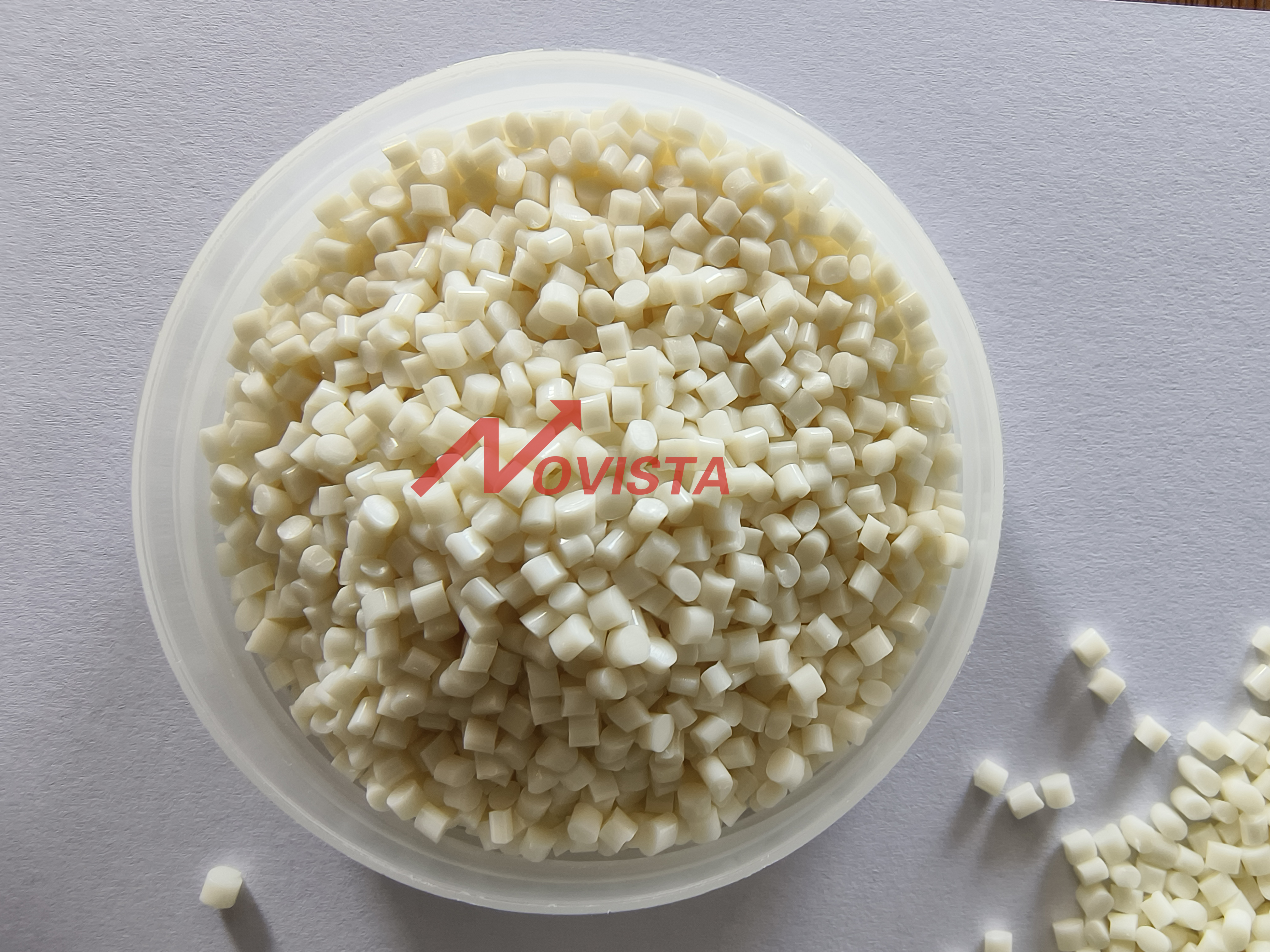
PVC materials are widely used in the construction industry. However, yellowing remains a persistent issue. To effectively address this problem, it is essential to understand its causes, which can generally be divided into internal and external factors.
I. Internal Factors
Thermal Degradation and Dehydrochlorination (HCl Release)
Under the influence of heat, light, or mechanical shear, the stability of PVC molecular chains decreases significantly. Chain scission leads to the release of hydrogen chloride (HCl), followed by the formation of conjugated double bonds (-C=C–C=C-).
When the number of conjugated double bonds reaches approximately 5–7, they begin to absorb visible light, causing the material to appear yellow. As the reaction progresses and the number of conjugated structures increases, the color deepens from yellow to brown, and eventually to black due to carbonization.
During PVC processing, high temperature is the key factor triggering this reaction. For example, in extrusion or injection molding, improper temperature control can accelerate dehydrochlorination, thereby intensifying yellowing.
Influence of Additives
Insufficient or Ineffective Stabilizers:
To inhibit PVC degradation, thermal stabilizers such as lead-based stabilizers, calcium-zinc stabilizers, and organotin stabilizers must be added during processing. If the stabilizer dosage is insufficient, of poor quality, or improperly formulated, it cannot effectively neutralize HCl or scavenge free radicals, resulting in rapid yellowing. Some manufacturers reduce costs by using low-quality stabilizers or lowering dosage, significantly increasing the risk of discoloration.
Plasticizer Migration and Oxidation:
In flexible PVC products, large amounts of plasticizers are typically used, especially phthalates. These plasticizers tend to migrate to the surface and oxidize in air, forming chromophoric groups such as carbonyls, which cause yellowing. For instance, yellowing on the surface of PVC flooring after prolonged use is often due to this phenomenon.
Other Additives:
Lubricants, fillers, and other additives may also contribute if their quality is poor or they contain impurities. For example, calcium carbonate fillers containing metal impurities such as iron or copper can catalyze PVC degradation, making the material more prone to yellowing.
II. External Factors
Thermo-Oxidative Degradation
High-temperature environments, such as prolonged sun exposure or proximity to heat sources, significantly accelerate PVC degradation and oxidation. Oxygen participates in the reaction, forming peroxides and free radicals, which further promote yellowing.
In regions with high temperatures and strong sunlight, outdoor PVC products like pipes, doors, and windows are particularly susceptible to yellowing due to the combined effects of heat and oxygen.
Photo-Degradation
Ultraviolet (UV) radiation is one of the primary causes of yellowing in outdoor PVC products. Due to its high energy, UV radiation can directly break chemical bonds in PVC molecular chains, initiating free radical chain reactions and forming chromophores.
PVC products without UV stabilizers can rapidly age and yellow under sunlight. For example, untreated PVC awnings may show significant yellowing after just one summer of exposure.
Contamination and Contact
Contact with certain chemicals can also induce yellowing. For instance, when PVC comes into contact with rubber products, especially sulfur-containing rubber, sulfur migration may occur, leading to vulcanization-related contamination and discoloration.
On construction sites, improper storage, such as placing PVC pipes together with sulfur-containing waterproof materials, can result in such yellowing issues.
Mechanical Stress
Internal stress generated during processing or use can destabilize PVC molecular chains, making them more susceptible to degradation. For example, improper installation of PVC doors and windows may introduce excessive mechanical stress, leading to localized yellowing during service life.
Conclusion
PVC yellowing is a complex phenomenon influenced by formulation, processing conditions, and environmental exposure.
A well-balanced stabilizer system, high-quality raw materials, and proper processing control are essential to ensure long-term color stability.
For demanding applications, especially outdoor use, combining thermal stabilization with UV protection is the key to achieving durable and aesthetically stable PVC products.