


Reference Solutions to Prevent and Address PVC Yellowing
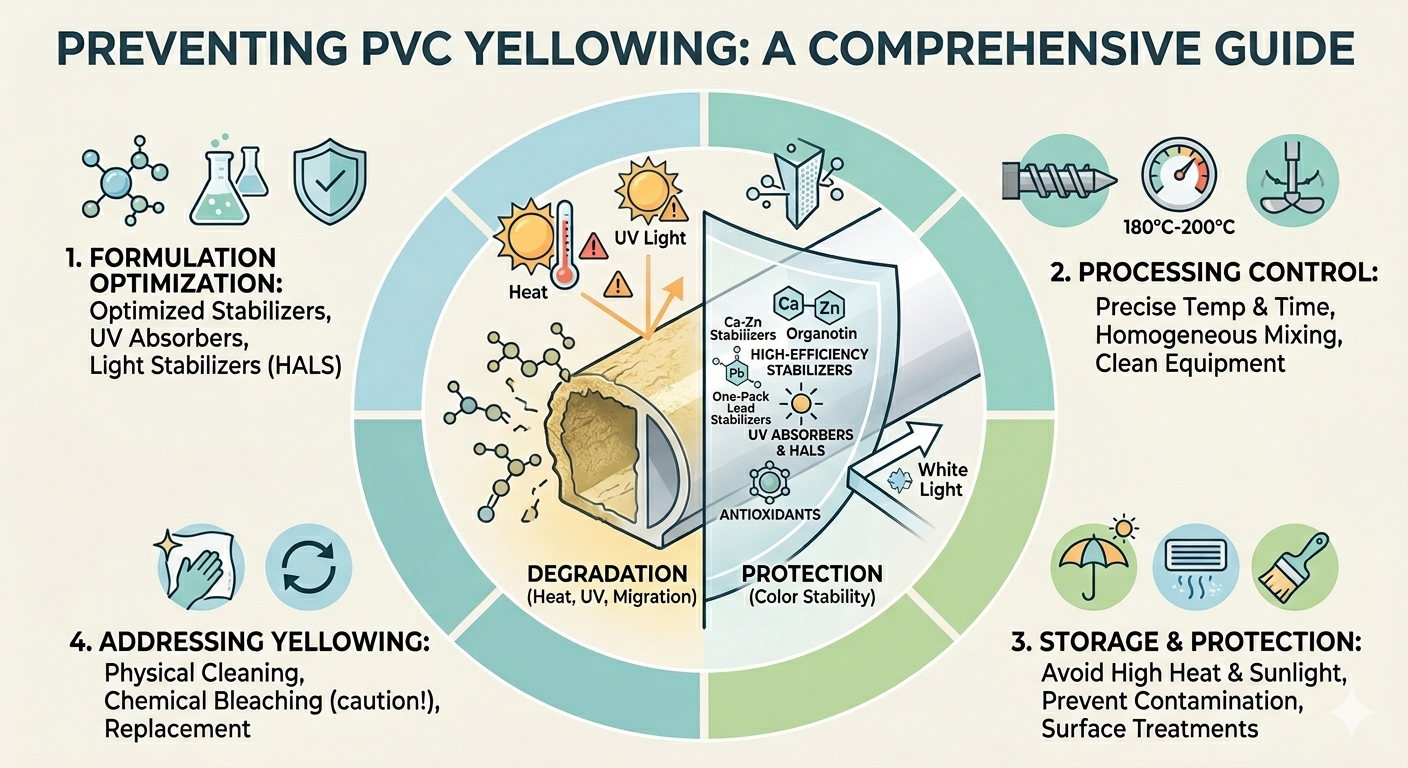
Yellowing is one of the most common challenges in PVC (Polyvinyl Chloride) manufacturing and application. It is primarily caused by dehydrochlorination due to heat or UV exposure, leading to the formation of conjugated double bonds (polyenes) that discolor the material.
To ensure product longevity and aesthetic appeal, here is a comprehensive guide to preventing and treating PVC yellowing.
I. Optimizing Formulation Design
1. Utilize High-Efficiency Heat Stabilizers
The choice of stabilizer is the first line of defense against thermal degradation.
- Selection: Choose stabilizers based on specific requirements, such as Ca-Zn (Calcium-Zinc) composites, organotin, or One-Pack Lead stabilizers. Ensure adequate dosage and uniform dispersion.
- Synergy: For high-end construction materials, compounding different stabilizers can create a synergistic effect. For example, in premium window profiles, combining Ca-Zn stabilizers with a small amount of organotin can significantly enhance thermal stability and minimize yellowing.
2. Incorporate UV Absorbers and Light Stabilizers
For outdoor applications, UV protection is non-negotiable.
- Additives: Use Benzotriazoles or Benzophenones as UV Absorbers, paired with HALS (Hindered Amine Light Stabilizers).
- Impact: These additives absorb or quench UV energy before it triggers photodegradation. In outdoor signage, for instance, proper UV packages significantly extend service life and color retention.
3. Select High-Quality Plasticizers and Fillers
Secondary additives can often be the "hidden" cause of yellowing.
- Stability: Use plasticizers with excellent migration resistance and weatherability, such as DOTP or citrates.
- Fillers: Opt for surface-treated fillers to reduce the risk of yellowing caused by impurity oxidation. In wire and cable insulation, migration-resistant plasticizers are essential to maintain both color and electrical properties.
4. Leverage Optical Masking and Brighteners
- Toners: Small amounts of Ultramarine Blue can neutralize slight yellow tints, making the product appear "whiter" to the eye.
- OBAs (Optical Brightening Agents): These absorb invisible UV light and emit blue light to compensate for the yellow base. This is a standard practice for maintaining the "bright white" look of PVC ceiling panels.
II. Rigorous Processing Control
5. Manage Temperature and Residence Time
While ensuring full plasticization, keep processing temperatures (barrel and mold) as low as possible.
- Precision: For pipe extrusion, maintaining temperatures between 180°C and 200°C while optimizing screw speed reduces the "residence time" of the melt in the barrel, preventing heat-induced yellowing.
6. Ensure Homogeneous Mixing
Inadequate dispersion of stabilizers creates "weak spots" where degradation begins. Utilize high-speed mixers to ensure that all stabilizers and antioxidants are perfectly distributed within the PVC resin matrix.
7. Regular Equipment Maintenance
Residual degraded material in the barrel acts as a catalyst for further degradation. Periodically purge and clean screws and dies to prevent "carbonized" or degraded PVC from contaminating new batches.
III. Standardizing Storage and Installation
8. Environmental Protection
Finished PVC products should be stored in cool, dry, and ventilated warehouses away from heat sources. During summer transport, use tarps or shaded containers to prevent premature yellowing from intense sunlight.
9. Chemical Compatibility
Avoid storing PVC products near rubber or oxidizing chemicals. In construction sites, regulatory planning is needed to separate PVC materials from incompatible substances.
10. High-End Surface Treatments
For premium architectural applications, consider protective coatings:
- Types: Fluorocarbon (PVDF) or Acrylic coatings.
- Benefits: These provide a barrier against UV and pollutants. High-end exterior cladding panels with fluorocarbon coatings offer superior anti-yellowing and self-cleaning properties.
IV. Remediation of Yellowed Products
- Physical Cleaning: For mild surface oxidation, professional plastic cleaners and soft cloths may help. This is often a temporary fix.
- Chemical Bleaching: Strong oxidants (like dilute sodium hypochlorite) can sometimes bleach chromophores. Caution: This carries a risk of damaging the surface finish.
- Replacement: For PVC components that have turned brittle or severely yellowed, replacement is the safest method to ensure structural integrity.