


Formula and Process Design for High-Rigidity, Low-Density PVC Wood-Plastic Foam Boards
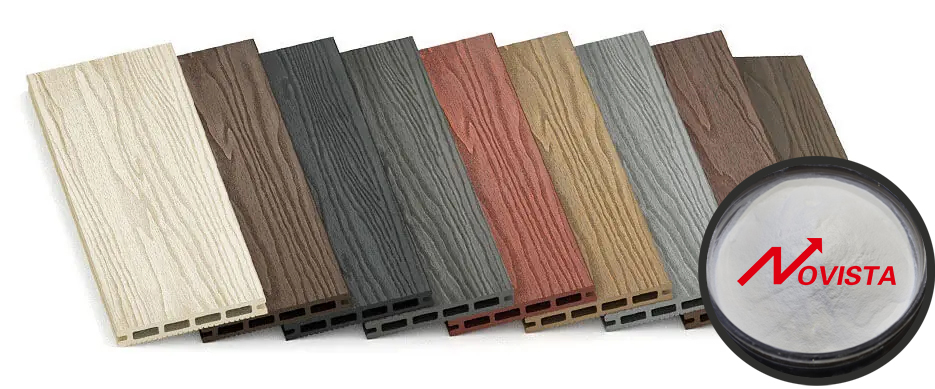
Polyvinyl Chloride (PVC)-based foam boards were initially used primarily in fields such as advertising cabinets and bathroom vanities.
However, traditional PVC foam boards suffer from two major drawbacks: high density, which leads to excessive weight, and insufficient rigidity (low flexural modulus) coupled with a low heat deflection temperature (HDT). These limitations prevent them from fully replacing natural wood in many load-bearing and heat-resistant applications.
Is there a solution that can simultaneously address the challenges of density, rigidity, and heat resistance?
The answer is yes. The manufacturing technology for high-rigidity, low-density PVC Wood-Plastic Composite (WPC) foam boards successfully overcomes these bottlenecks through scientific formula design and precise processing technology. We will now delve into the core secrets of this technology.
I. Formula Component Analysis
1. Primary Raw Material:
PVC Resin: SG-7 or SG-8 type PVC resin is adopted as the main matrix, providing the fundamental framework of the material.
2. Material Reinforcement: Inorganic Fibers and Fillers
Wollastonite Fiber: This is the most crucial component for enhancing product rigidity. Powdered fibers with a fineness of 200–325 mesh and an aspect ratio (>=5) are surface-treated with a silane coupling agent. They act like the "steel bars" in reinforced concrete, forming a powerful enhancing network within the plastic matrix to significantly increase the flexural modulus.
Calcium Carbonate (Light and Heavy): Both ultra-fine powders (1000–1500 mesh) are used and treated with a titanate coupling agent. This ensures excellent dispersion while serving as a low-cost filler that also contributes to rigidity.
3. Toughening and Processing Improvement
Acrylic Polymer Processing Aids (PA): As copolymers of Methyl Methacrylate (MMA) with Butyl Acrylate (BA) or Styrene, their addition effectively improves the material's impact resistance and optimizes the processing flowability.
PVC Foamed Regrind/Reclaimed Powder: This enables resource recycling and helps control both cost and density.
4. Foaming System: The "Weight Reduction" Key
Compound Foaming Agents: A blend of AC (Azodicarbonamide) and NC (Sodium Bicarbonate) foaming agents is used. Under the precise control of a PVC foaming regulator (such as NOVISTA TF-530), a uniform, fine-celled foam structure is formed. This is the core technology for achieving low density.
5. Surface Treatment and Interface Fusion: The "Adhesive"
Wood Flour Treatment Agent and Coupling Agent: These agents are used for the surface treatment of wood flour and calcium carbonate and are critical to the success of the product. They dramatically improve the interfacial compatibility between the hydrophilic natural fibers/fillers and the hydrophobic PVC plastic. This ensures effective stress transfer, maximizing the reinforcement effect.
II. Precision Manufacturing Process
Achieving high-quality products requires not only a scientific formula and high-grade raw materials but also a rigorous process:
1. Stepwise Pre-treatment:
Wollastonite fiber, wood flour, and calcium carbonate are first subjected to individual surface treatments. This step is essential as it activates the filler surfaces, making them "intimately compatible" with the PVC matrix.
2. High-Efficiency Mixing:
All raw materials except the foaming agents are mixed in a high-speed mixer (1200–1800 rpm) until the temperature reaches 100–120°C.
The foaming agents are then added. The material is subsequently transferred to a low-speed mixer (80–120 rpm) and cooled to 50–70°C. This process ensures uniform dispersion of all components and prepares the latent energy for foaming.
3. Extrusion Foaming and Shaping:
The mixed material is fed into a high-temperature conical twin-screw extruder.
Through precise control of the temperature zones (Barrel: 145-185°C, Die: 160-185°C) and screw speed (15-30 r/min), the material undergoes plasticization, foaming, and preliminary shaping within the die head.
4. Cooling, Sizing, and Cutting:
The sheet-shaped molten material is cooled and sized through a calibration die.
Finally, it is cut into standard 1.22m x 2.44m boards using a two-way cutting saw.
III. Final Performance Metrics
Using the above technology and process, the resulting PVC WPC foam board guarantees excellent performance:
Density: 0.45 ~ 0.75 g/cm³ (Significantly lower than traditional boards, resulting in lighter products).
Flexural Strength: 18 ~ 25 MPa (High resistance to bending).
Flexural Elastic Modulus: 1800 ~ 2600 MPa (High rigidity, comparable to wood).
Heat Deflection Temperature (HDT): 80 ~ 90°C (Substantially improved heat resistance, broadening applications).
Aesthetics and Sustainability: The boards have a pleasing appearance and do not require surface painting, avoiding inconvenient operations and environmental pollution.
IV. Conclusion
The technology for high-rigidity, low-density PVC WPC foam boards successfully overcomes the industry challenges of poor rigidity and low heat resistance in traditional WPC materials. Key breakthroughs include Wollastonite fiber reinforcement, multi-stage surface treatment, and precise foaming control.
This material is light yet strong, waterproof, heat-resistant, environmentally friendly, and non-toxic. It provides a superior "plastic-for-wood" solution for furniture, interior decoration, and construction formwork, marking a new, high-performance stage in the development of wood-plastic composites.